

 Rice prices have fallen for some varieties in the Mekong Delta during the Winter-Spring crop season compared to the same period last year, while sharply rising oil prices have increased production and harvesting costs for farmers, leading to reduced profits. Given the reality of falling rice prices and difficulties in rice exports, the Vietnam Food Association has proposed that businesses purchase and stockpile rice to help stabilize the market.
Proposal for businesses to purchase and temporarily store rice from the Winter-Spring crop.
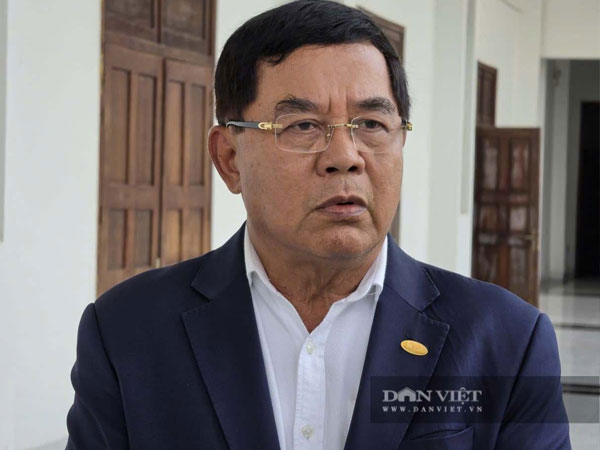
Regarding the current rice consumption situation, in an interview with Dan Viet newspaper, Mr. Do Ha Nam - Chairman of the Vietnam Food Association - said that the Vietnamese rice market is facing quite a few difficulties.
Specifically and most importantly, Vietnam's major rice market, the Philippines, is implementing import volume controls, in addition to restricting imports from Vietnam.
Another market, Indonesia, has also been affected to some extent. In addition, world rice prices are facing difficulties due to the general situation of supply exceeding demand.
According to Mr. Nam, although Vietnamese businesses have been very dynamic and diligent in seeking and expanding markets, especially in Africa and China, this has led to a more than 50% increase in rice exports in the first two months of the year compared to the same period last year.
However, Mr. Nam's biggest concern is the upcoming Winter-Spring rice crop, with Vietnam's rice exports expected to reach around 4 million tons. This could lead to a surplus of exported rice under unfavorable export conditions.
Therefore, Mr. Nam suggested that a measure to help people reduce risks and avoid price drops is for the competent state authorities to consider proposing that businesses participate in temporary stockpiling at this time.
"By doing so, we won't have to push too much of our goods out (meaning exporting rice - PV). This will likely stabilize prices, which are currently too low," Mr. Nam said.
Regarding this issue, Mr. Nam stated that the Vietnam Food Association has reported to the Government, the Ministry of Industry and Trade, and the Ministry of Agriculture and Environment to seek support and implementation.
Furthermore, according to him, the government needs to pay more attention to the issue of signing government contracts because in recent years these contracts have been very important in maintaining price stability.
Mr. Nam affirmed that these measures were necessary because the cost of producing rice in the winter-spring crop for farmers had increased significantly due to rising oil prices and a sharp increase in fertilizer prices resulting from tensions in the Middle East.
As for businesses, they need to make greater efforts in expanding markets and signing new export contracts, thereby boosting procurement. Only then can they contribute to improving rice prices.
To increase rice procurement until the end of the Winter-Spring crop season, Mr. Nam also suggested that banks provide capital support for businesses to temporarily store rice, as bank interest rates are currently very high.
Falling rice prices for some varieties and rising oil prices are eroding people's incomes.
According to observations by Dan Viet reporters , farmers in Can Tho City, Vinh Long, Dong Thap, and other provinces are currently harvesting their winter-spring rice crop. Unlike previous years, farmers are less optimistic this season because the selling price of rice is not promising.
Specifically, locals reported that the price of fresh paddy rice sold at the field for Dai Thom 8 - the rice variety with the largest planted area in the Mekong Delta's Winter-Spring crop - is only 5,800 - 6,000 VND/kg, while the price during the same period last year was 6,400 - 6,600 VND/kg, a decrease of about 600 VND/kg.
Similarly, the price of OM 18 rice sold in the field is 6,000 - 6,100 VND/kg, while the price of this rice variety at the same time last year was 6,500 - 6,600 VND/kg, a decrease of 500 VND/kg.
For some other rice varieties, the planted area is small and the price is similar to or slightly higher than the same period last year, but not significantly.
Besides unfavorable rice prices, farmers are also facing pressure from rising rice harvesting costs. Specifically, the rental price for combine harvesters has increased from 320,000 VND to 350,000 VND per công (1,000 m2), and the price of boats transporting rice has increased by 10,000 – 20,000 VND per ton.
Regarding the increase in combine harvester rental prices, the reason is believed to be the rise in fuel prices from 18,000 VND to over 30,000 VND per liter.
To operate a combine harvester for one hectare requires at least 15 liters of fuel (under dry field conditions). Therefore, to harvest rice at the right time, farmers have to spend an additional approximately 180,000 VND per hectare.
Because this year's winter-spring rice crop yielded high productivity (due to favorable weather and fewer pests and diseases), ranging from 1.1 to 1.4 tons per hectare (depending on the region), it somewhat compensated for the losses, helping farmers maintain a profit of about 2 million VND per hectare.
According to a report by the Department of Crop Production and Plant Protection (Ministry of Agriculture and Environment), approximately 260,000 hectares of rice have been harvested in the Mekong Delta during the 2025-2026 Winter-Spring crop season, meaning about 1 million hectares are still awaiting harvest.
Thus, with an additional cost of approximately 180,000 VND/hectare due to rising oil prices, it can be estimated that the increased cost of rice harvesting alone will be around 180 billion VND.





© Copyright 2025 The SSResource Media.
All rights reserved.