

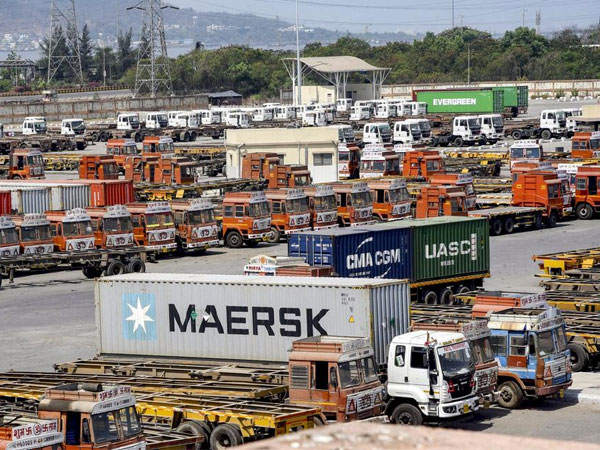
 Industry estimates suggest nearly 70% of outbound shipments have been affected
The prolonged West Asia crisis and the near-halt of traffic through the Strait of Hormuz and other Gulf shipping lanes have triggered widespread disruption for Indian exporters, with industry estimates suggesting nearly 70 per cent of outbound shipments have been affected.
Shipping delays, freight rates surging by as much as 300 per cent, cargo stranded at ports and in transit, and gas shortages have created severe stress across export sectors. While the government has asked exporters to identify consignments that could be diverted to alternative markets, exporters say this is difficult as shipping lines are unwilling to take responsibility for such changes.
Export Strain
“Only about 30 per cent of shipments are currently moving, as most major shipping lines have suspended services. Even when vessels operate, they are taking longer routes via the Cape of Good Hope, which adds to the challenge. Exporters say that out of the seven or eight shipping lines they usually work with, only one or two are currently operating,” said Ajay Sahai, Director General, FIEO.
Exporters have also flagged a 200–300 per cent increase in logistics costs due to longer routes, war-risk and emergency fuel surcharges, higher insurance premiums, and mounting demurrage and storage charges.
“There are three immediate problems exporters are facing,” said Israr Ahmed, a Chennai-based leather goods exporter. “Transport and logistics costs have risen sharply, supply-chain costs for petroleum-based materials have increased, and energy costs such as LPG and fuel have also gone up.”
Uncertainty has worsened for exporters whose cargo is already in transit or stuck at ports. Shipping lines are redirecting vessels to the Port of Khorfakkan, which lies outside the Strait of Hormuz, but exporters are then required to arrange onward transport to their final destinations.
Trade Bottleneck
The Commerce and Industry Ministry has sought details of stranded shipments for possible diversion to alternative markets, but exporters say this is difficult in practice.
“Shipping lines are taking cargo to ports like Khorfakkan but want exporters to take delivery there and assume responsibility for it,” Sahai said. “MSMEs do not have the logistics capacity to move cargo onward. They have already paid for shipping to the final destination, their money is not being returned, and they must incur additional costs to transport the goods.”
The disruption is already affecting export clusters. About 1,500 containers from the Morbi ceramic industry in Gujarat are currently stuck at ports, exposing exporters to heavy losses. The cluster, which relies on natural gas and propane to fire kilns and run drying processes, is also facing a severe gas shortage.
Gas Crunch
Engineering exporters, too, have been hit by the gas shortage. “West Asia accounts for about 16 per cent of India’s engineering exports, and shipments to the region have been severely disrupted. Gas shortages have also forced some furnaces to shut, so we expect a shortfall in engineering exports in March 2026 compared with March last year,” said Pankaj Chadha from EEPC India.
GCC countries accounted for roughly 13 per cent of India’s total exports in FY25 at $56.86 billion, with exports to the UAE alone at over $36 billion. About 25–30 per cent of export consignments from India transit Gulf shipping lanes connected to the Strait of Hormuz, while about 30-40 per cent transit through the Red Sea route, according to various industry estimates.








© Copyright 2025 The SSResource Media.
All rights reserved.