

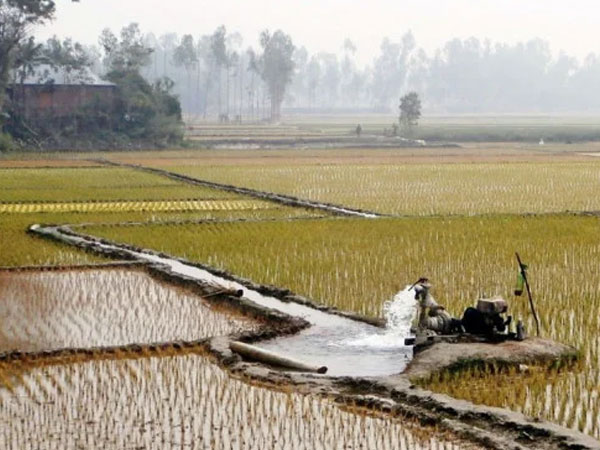
 Bangladesh is now the world’s third-largest rice producer, with output rising from 10.9 million metric tons in 1971 to 42.0 million metric tons in 2022. Despite the abundance of the staple crop, malnutrition remains widespread because diets are heavily dependent on rice, which lacks several essential micronutrients.
Bangladesh has sharply increased rice production over the past five decades, yet widespread micronutrient deficiencies persist, creating what researchers describe as a "hidden hunger" paradox in one of the world's largest rice-producing nations.
A new study published by the ADB Institute titled "Yield vs. Nutrients: What Drives Farmers' Varietal Adoption Decisions in Bangladesh?", is examining the drivers of rice variety adoption found that education plays a key role in how farmers weigh the trade-off between maximizing yields and selecting varieties with nutritional or environmental benefits.
Bangladesh is now the world's third-largest rice producer, with output rising from 10.9 million metric tons in 1971 to 42.0 million metric tons in 2022. Despite the abundance of the staple crop, malnutrition remains widespread because diets are heavily dependent on rice, which lacks several essential micronutrients.
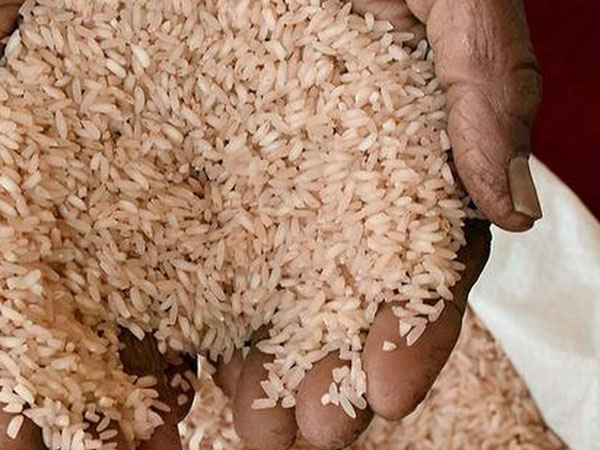
Health indicators reflect the gap between food availability and nutrition. About 28% of children under five are stunted, nearly 37% of women of reproductive age are anaemic, and roughly 13% of the population is undernourished. Zinc deficiency affects more than 40% of preschool-aged children and 57% of nonpregnant and nonlactating women.
Researchers say farmers' preference for high-yielding rice varieties contributes to the problem.
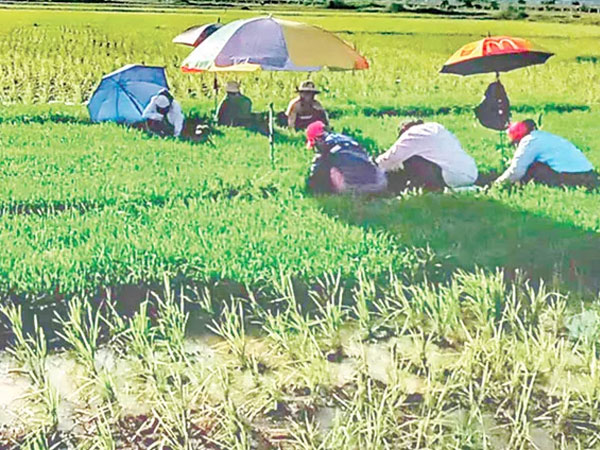
The study, based on data from 3,493 farming households in the Faridpur district, found that about 81% of farmers prioritised higher yield over other traits such as improved nutrition, climate resilience, or input efficiency when choosing which rice varieties to grow.
This preference has slowed the adoption of nutrient-enriched crops such as zinc-biofortified rice, which currently accounts for only about 1% of the country's total rice-growing area.
Farmers often choose established "mega-varieties" such as BRRI dhan28 and BRRI dhan29, which offer predictable and relatively high yields. Researchers found that newer varieties with enhanced nutritional traits may be viewed as riskier if their productivity is perceived to be lower.
"Farmers are generally reluctant to adopt varieties where yield is compromised or associated with higher agronomic risks," the study found.
The research aimed to understand why food security concerns continue to outweigh nutritional considerations in farmers' decisions. It analysed socioeconomic factors such as age, education, assets, and access to agricultural information using logistic regression and machine learning techniques.
Education emerged as a key factor shaping preferences.
Household heads who favoured traits other than high yield had an average of 5.08 years of schooling, compared with 4.16 years for those prioritising yield. Spouses in households that valued non-yield traits averaged 4.49 years of schooling, compared with 4.08 years in yield-focused households.
Years of schooling for the household head was identified as the second most influential factor in predicting rice trait preferences, after age.
Econometric results showed that higher education levels for the household head, the spouse, and the highest-educated member of the household were all associated with a lower likelihood of selecting high-yield traits over alternatives.
Researchers said education appeared to increase awareness of the long-term benefits of nutritional, environmental, and resilience traits.
"Education is positively associated with being aware of and valuing nutritional and environmental traits," the study noted, adding that more educated farmers may better understand these benefits even when they come at the expense of maximum productivity.
In contrast, farmers with lower levels of education were more likely to focus on immediate productivity and income needs, favouring high-yielding varieties that help ensure food security.
Age also played a role in decision-making. Older household heads were less likely than younger ones to prioritise high-yield varieties, the study found.
Economic conditions further shaped choices. Households that were self-sufficient in rice production, faced credit constraints, or owned productive assets such as motorbikes, power tillers, and mobile phones were more inclined to select high-yield traits, suggesting that risk management and financial considerations influence crop selection.
Institutional factors were also significant. Farmers with access to information through public extension agents or membership in non-governmental organisations were more likely to choose high-yielding varieties.
Researchers said the findings highlight a central policy challenge: farmers often face a trade-off between securing stable harvests and adopting crops that could improve nutrition.
As long as productivity remains the dominant factor in variety choice, adoption of nutrient-rich crops is likely to remain limited, they said.
To address the issue, the study recommends that breeding programmes integrate higher yields with other desirable traits such as enhanced nutrition, climate resilience, and resource efficiency.
Researchers said combining these characteristics could help ensure that farmers do not have to sacrifice productivity to improve dietary outcomes.
Such an approach, they said, may be necessary if Bangladesh is to maintain gains in food production while addressing persistent micronutrient deficiencies across the population.







© Copyright 2025 The SSResource Media.
All rights reserved.