

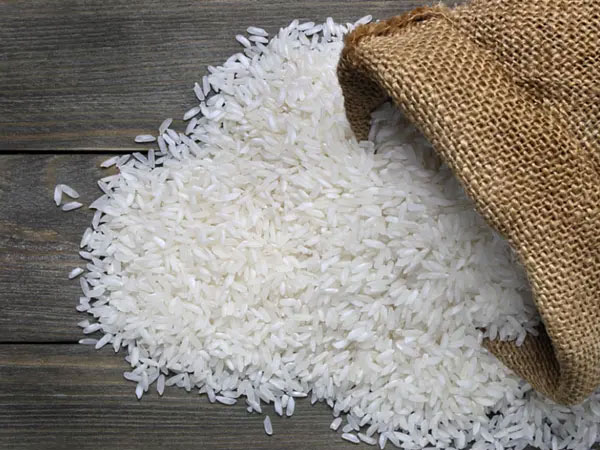
- West Africa must scale up rice production and strengthen the entire value chain to compete with imported rice, according to World Bank official Chakib Jenane.
- The World Bank has expanded its agricultural financing across the region, including a $500 million program in Nigeria and a $300 million project in Togo.
- The institution plans to double its annual global agricultural investments to $9 billion under its AgriConnect initiative.
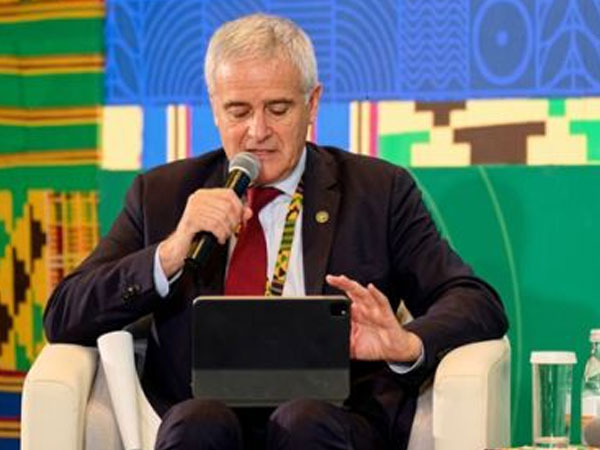 West Africa will need to scale up rice production and strengthen its entire value chain if it wants to transition from a net rice-importing region to self-sufficiency, according to Chakib Jenane, Director of the Planet Department for West and Central Africa at the World Bank.
Jenane made the remarks to Agence Ecofin on the sidelines of the Rice Investment Roundtable held on June 2-3, 2026.
Rice demand has increased steadily across member states of the Economic Community of West African States (ECOWAS) for more than a decade. However, the region continues to struggle with achieving sustained growth in production.
Jenane said West Africa cannot rely on a quick solution to achieve rice self-sufficiency. Instead, the region must scale up production through structural reforms.
In a region where smallholder farmers still dominate production and remain highly exposed to climate risks, he called for a fundamental shift in agricultural development strategies.
“West Africa possesses considerable agricultural assets. The challenge does not stem from a lack of resources but from their underutilization. To make progress, stakeholders can no longer move forward incrementally. They must structure farms, organize producers into larger and moe mechanizable areas, and expand their access to credit,” he said.
Jenane said this transformation aligns with the systemic approach promoted through the World Bank’s AgriConnect initiative, which aims, among other objectives, to strengthen the entire West African rice value chain.
“The objective is to build a high-performing ecosystem around rice. In countries such as Senegal, Mali and Nigeria, yields per hectare already match levels observed in Asia. However, producing more rice alone does not suffice. Stakeholders must also improve storage, processing and marketing. Ultimately, the entire West African rice value chain must compete effectively with imports if the region wants to succeed,” he said.
Beyond economic considerations, Jenane said food security and social stability also justify stronger investment in the rice sector.
Rice accounts for nearly 40% of cereal consumption in West Africa, making it a strategic commodity. However, the sector remains highly vulnerable to external shocks.
“We cannot leave populations permanently exposed to fluctuations in global markets. Successive crises—including the Covid-19 pandemic, the war in Ukraine and disruptions to maritime shipping routes—have destabilized supply chains and increased the cost of inputs, particularly fertilizers,” Jenane said.
He also highlighted the World Bank’s growing financial commitment to agricultural development across the sub-region.
“For Nigeria, we recently approved a $500 million program dedicated to agricultural value chains and smallholder farmers, particularly in the rice sector. In Togo, we approved $300 million in financing to support the modernization of the agricultural sector. We are also working on new projects in Guinea, Senegal, Côte d’Ivoire and other countries,” he said.
The World Bank currently invests approximately $4.5 billion annually in agriculture worldwide.
The institution aims to increase that figure to $9 billion through AgriConnect. The initiative seeks to accelerate agricultural transformation, create more jobs for young people and strengthen food security across developing economies.
Jenane said stronger investments, combined with improvements across production, storage, processing and distribution, will determine whether West Africa can reduce its dependence on imported rice and build a more resilient agricultural sector.




© Copyright 2025 The SSResource Media.
All rights reserved.