

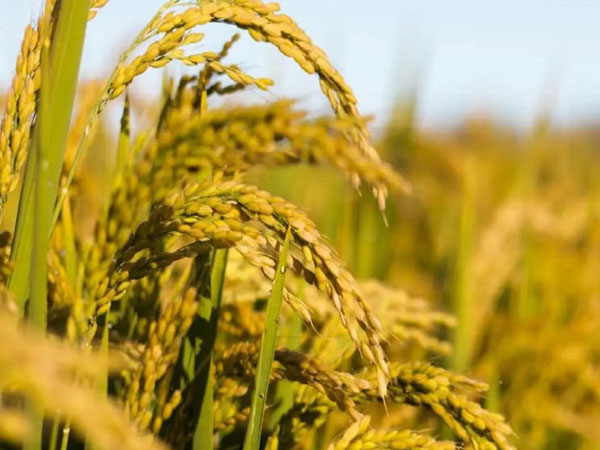
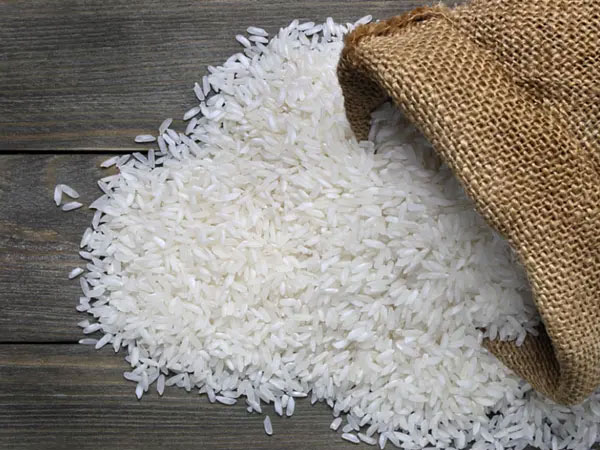
 OUR rice policy, which has been implemented since the 1970s, has consigned our palay farmers and agricultural workers in general to poverty. It revolves around the goal of attaining rice self-sufficiency and in pursuit of this, successive administrations allocated the bulk of the total agricultural budget for rice productivity-enhancing programs. From the Masagana 99 of Marcos Sr. in the ‘70s to the Masagana Rice Industry Development Program of this administration, the obsession is to attain rice self-sufficiency despite enormous costs to the agriculture sector and the overall economy.
This has ensured the impoverishment of our palay farmers and agricultural workforce. The main reason is that the world, including agriculture, has undergone tremendous changes in the last 50 years while our rice policy has not. In the 1960s and the 1970s, for instance, the main source of growth was labor productivity. Thus, distributing lands to tillers through an agrarian reform program was the fastest route to raising overall farm productivity.
It is no longer land that is the main source of growth and productivity but research and development (i.e., technology). However, consolidation of contiguous lands for production management and scheduling purposes is needed to fully harness the benefits of technological innovation. Unfortunately, agrarian reform does not allow this and as a result, we cannot significantly raise farm productivity using modern technologies.
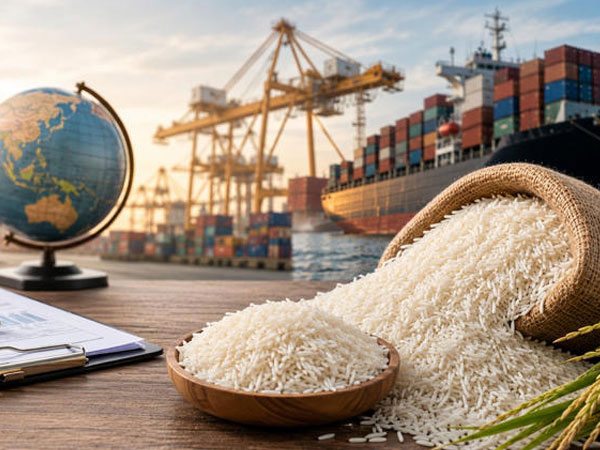
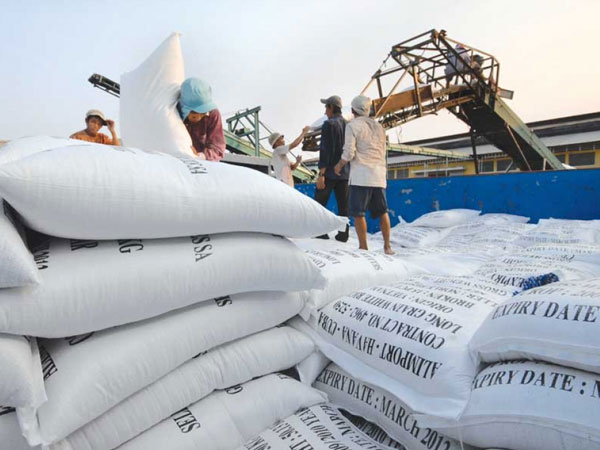
Our population was also only around 45 million in the 1970s and global trade in rice was limited. Logistics was also a major challenge. Now, the Philippine population is estimated to be around 115 million and global rice trade is robust because countries like India, Vietnam and Thailand are producing massive surpluses. And unlike in the past wherein it took 60 days to replenish rice inventories with imports, modern logistics can now bring in the rice in 30 days or less. (Note that the Department of Agriculture is still using 60 days as the rice inventory benchmark.)
Real rice price data over the long term, meanwhile, reveals a sad story for our cultivators. Prices never significantly rose. This is true globally for most staple food products like wheat, corn and of course, rice. The simple reason is that since these are staples, governments all over the world ensure that they remain relatively cheap in order not to trigger social unrest. Consumers far outnumber producers and hence their sentiment is valued more, particularly during election periods.
To compensate for this political bias, governments usually resort to providing subsidies to farmers in order to mitigate production cost increases while maintaining low farm gate prices. The Philippines is no exception as manifested by the enormous subsidies, which practically constitute almost 40 percent of the palay production cost, that are extended to small rice farmers. Nonetheless, rice farm productivity remains low because modern farm technologies cannot be fully utilized due to land fragmentation. Based on latest Philippine Statistics Authority data, the average farm size now is a measly 0.83 of a hectare.
With real rice prices stagnant over time and miniscule farm sizes, the obvious result is that our palay farmers are inevitably poor. A simple calculation unequivocally shows this. GDP (gross domestic product) per capita averages around $4,000 in the Philippines, equivalent to around P230,000. A palay farmer tilling two hectares will be lucky to net P160,000 to P180,000 annually, way below the average GDP per capita. Worse is that the average palay farmer cultivates an area of only a hectare or less.
No matter how enormous the subsidies poured by the government to palay farmers to earn a decent income, it will never attain that goal. Many small farmers are instead forced to engage in non-farm jobs such as tricycle driving, vending and construction work, etc. Data now shows that almost 50 percent of the income of our cultivators comes from non-farm employment.
Despite solid evidence, the government refuses to recognize this reality due to political considerations. It continues to increase the budget for rice despite the rice self-sufficiency goal not having been attained for half a century now. On average, the budget for rice-related activities represents almost 60 percent of the total agricultural outlay. This year it is 70 percent and by the end of 2026, we expectedly will see the same results of relatively stagnant productivity in palay farms, persistent low incomes for farmers and an agricultural sector remaining in doldrums as other sub-sectors were neglected given the rice-biased nature of budget allocations.
With rice eating up more than half of the agricultural budget, there is little left for the development of other commodities where the country has a comparative advantage. The gross value added of palay to agriculture is around 21-22 percent while corn-livestock-poultry is nearly 29 percent, yet the budget allocated for the latter is just a pittance. Similarly, coconut is planted to around 3.7 million hectares, second to palay with more than 4.5 million hectares, but one hardly hears of investments in coconut research and development. Coconut byproducts such as oil, coco water, husks, etc. are clear export winners but never get a chance of being fully developed due to measly budget support.
The same is true for other promising commodities such as coffee, cacao, durian, mango, ube, pili, etc. Production of these crops provide higher incomes because they are high-value crops, but they are starved of resources because of our rice-obsessed budget. Note that bananas and pineapples became major agri-exports primarily because of private sector investments. The government hardly lifted a finger to develop the industries to where they are today.
In short, the combination of a rice policy framework that does not recognize significant changes happening in the global market and takes corresponding actions to mitigate the adverse impacts, plus a budgetary bias that devotes a major portion of resources to rice but in the process neglects the development of other crops, is a sure formula to consign our small farmers into perpetual poverty. The next time one hears government officials promising nirvana to farmers via supposedly “exciting and new” programs, just take it with a grain of salt.



© Copyright 2025 The SSResource Media.
All rights reserved.