

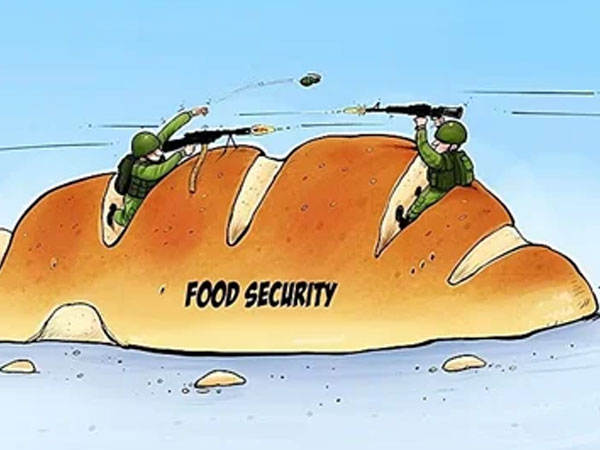
 The FAO warns that disruptions in the Strait of Hormuz and at Gulf fertilizer production centers are putting significant pressure on agricultural supplies, particularly in Asia and Africa.
The United Nations Food and Agriculture Organization (FAO) believes that the ongoing conflict in the Middle East could increase risks to global food security. Countries heavily reliant on imports of food, fertilizers, and energy are facing a serious cost of living crisis.
Risks from the strategic choke point in the Strait of Hormuz
Maximo Torero, Chief Economist of the FAO, said the conflict has exposed the vulnerabilities of countries with limited domestic production. Disruptions in the Strait of Hormuz, the world's most strategically important shipping lane, not only affect energy flows but also directly impact global agriculture.
The Gulf region is currently a key fertilizer production hub, supplying nearly 50% of the world's sulfur, 33% of its urea, and approximately 25% of its traded ammonia. Due to the complexities of the conflict, many fertilizer plants in Qatar and neighboring countries have had to temporarily cease operations, causing international fertilizer prices to skyrocket.
The ripple effect on agricultural powerhouses.
Supply disruptions from the Middle East are directly impacting production in many regions:
- Asia: This region is the most dependent on imports from the Middle East, receiving approximately 64% of its ammonia and over 50% of its sulfur and phosphate.
- Brazil: The world's largest soybean producer currently imports most of its urea from Qatar and Iran.
- India: Relies significantly on phosphate supplies from Saudi Arabia to sustain domestic agricultural production.
- The US and Australia: These major food exporting countries are also under pressure as urea and phosphate supplies are disrupted.
Sylvain Pellerin, an expert from the French Institute for Agricultural Research (INRAE), warns that a shortage of nitrogen-containing fertilizers such as urea, ammonium nitrate, and potassium could reduce global crop yields by up to one-third. Concerns are currently focused on the planting season in the southern hemisphere, which begins in June.
The risk of a cost of living crisis in Africa.
The African Union (AU), along with international organizations such as the AfDB and UNDP, warns that conflicts in the Middle East are putting the continent's economies at "serious risk." Approximately 300 million people in Africa face food insecurity, with famine reaching alarming levels in Burundi, the Democratic Republic of Congo, Madagascar, Somalia, and South Sudan.
Experts predict that a "trade shock" could quickly escalate into a "cost of living crisis" due to soaring energy and food prices. Armed conflict remains the leading cause of approximately 20 food crises, affecting nearly 140 million people worldwide last year.
Solutions to enhance resilience
In response, the AU proposed that countries need to strengthen energy security, expand fiscal policy space, and establish a continent-wide financial safety net. Implementing poverty reduction programs and rebuilding domestic supply chains are considered urgent tasks to reduce dependence on fluctuations from international markets.





© Copyright 2025 The SSResource Media.
All rights reserved.