

Geopolitical conflicts, particularly around key chokepoints like the Strait of Hormuz, are disrupting global food supply chains by driving up fertiliser, fuel and transport costs, increasing food inflation and reducing agricultural output. These shocks are hitting import-dependent regions hardest and exposing the vulnerability of existing supply networks, as seen in delays to exports and rising prices across multiple commodities. Agro-corridors and rules-based trade arrangements can help build more resilient, diversified and secure food supply chains in the face of ongoing geopolitical instability.
Geopolitical disruptions — like the 2026 Israel–US conflict with Iran — are increasingly seeping into global food supply chains, reflecting structural vulnerabilities of dependence on trade chokepoints. The Strait of Hormuz carries around 38 per cent of global crude oil, 13 per cent of chemicals such as fertilisers and 2.4 per cent of dry bulk cargo such as grains. With this chokepoint destabilised, the shockwaves are travelling far beyond energy markets.
One immediate consequence has been a rise in natural gas prices, sharply increasing the cost of certain nitrogenous fertilisers and further weakening access for least developed countries. Asia also remains heavily reliant on fertiliser exports from Gulf states, leaving agricultural production across the region exposed.
India — the world’s largest importer of urea and diammonium phosphate — is already seeking to diversify its supply sources towards countries such as Indonesia, Belarus, Russia and China. Anticipating the growing pressure due to rising fertiliser prices, India has announced a raise in nutrient-based subsidy by 11.6 per cent from 2025 and is providing further support for other fertilisers.
As fertiliser and fuel costs rise, the risk of cost-push food inflation grows while food production tightens. March 2026 World Bank estimates place the rate of increase in food price inflation to be higher than the rate for all goods and services.
The conflict in the Middle East has become far more than a regional security crisis — it is a major stress test for global food and agricultural supply chains. For farmers already operating on thin margins, the consequences are severe. High fertiliser prices can force producers to cut back on input use or shift towards less input-intensive crops, often reducing yields and incomes.
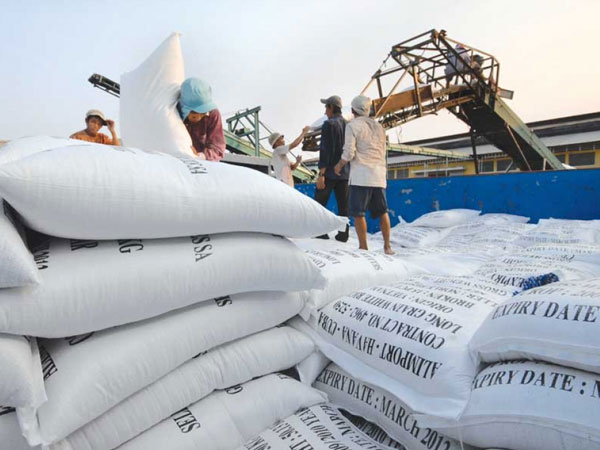
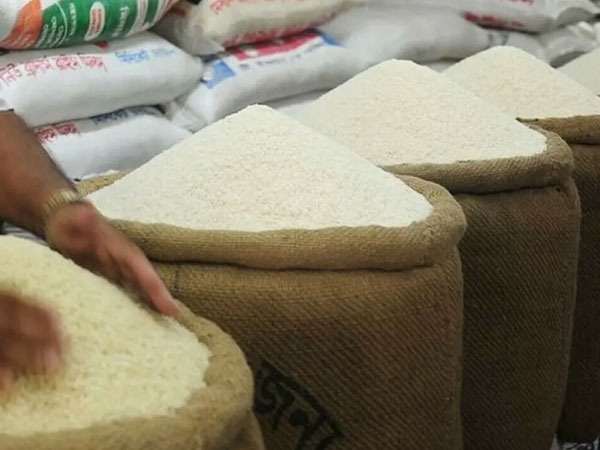
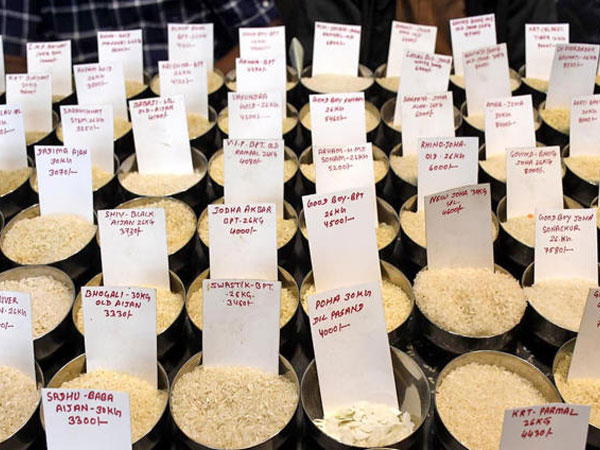
The chokepoint crisis has also derailed agricultural export flows across countries. Around 400,000 tonnes of Indian basmati rice have reportedly been held up at ports because of rising freight costs, while nearly 200 containers of perishable Indian exports were stranded in ports and holding zones with uncertain outcomes.
Any further escalation of the conflict could deepen the strain on global food supply chains, much like other geopolitical shocks which have repeatedly disrupted global food value chains. The early stages of the Russia–Ukraine war triggered sharp price spikes and heightened volatility in agricultural commodities. Likewise, Houthi attacks in the Red Sea and blockages around the Suez Canal have destabilised food commodity markets for both producers and consumers.
Such disruptions often reflect the growing weaponisation of supply chains as states seek geopolitical leverage. But when food supply chains are weaponised, the costs are borne not just by producers but also by consumers through hunger, malnutrition and food insecurity.
Food disruptions carry an immediate human cost. That is precisely why food supply chains should be treated as a special category in global crisis responses. Dedicated safeguards built on a rules-based order should be established to protect food access, affordability and supply stability. This was reiterated at the December 2025 WTO Trade Dialogues on Food, where leaders agreed that ‘trade in food is a moral obligation’.
While immediate relief measures are being undertaken, there is a need to address the structural vulnerability of trade chokepoints. Regional and inland cross-border economic corridors must be diversified to secure agricultural value chains, attract investment and unlock agribusiness opportunities across regions. The benefits of diversification include infrastructure development, stable supply chains and stronger cross-border market access, giving farmers and agribusinesses the confidence to shift into higher-value crops, processing and value addition.
Diversified corridors can turn agriculture from a subsistence activity into a growth engine. Regional trade groupings are beginning to recognise this, like the India–Middle East–Europe Economic Corridor. Announced in 2023, the corridor will connect India to Europe through the United Arab Emirates, Saudi Arabia and Greece, reducing dependency on maritime chokepoints.
ASEAN is increasingly treating economic corridors as building blocks for deeper regional integration within the ASEAN Economic Community pillar. In Cambodia, corridor-based interventions are being used to improve the competitiveness of rice, maize, cassava and mango crops along the Southern Economic Corridor and Southern Coastal Corridor. In Laos, development efforts are focusing on rice and organic vegetables, including those grown along the East–West Economic Corridor.
Diversified regional and inland corridors give producers in landlocked countries access to ports and coastal markets that would otherwise remain out of reach, reducing isolation and opening the door to regional commerce. In Myanmar, corridor strategies focus on rice, beans, pulses and oilseeds along the Northern Economic Corridor linking China and India.
The Greater Mekong Subregion’s corridors offer the clearest example of what this model can achieve, with investments coinciding with an 6–8 per cent increase in annual economic growth and a significant fall in extreme poverty in the region. Its replicability is what makes the model so compelling. Southeast Asian sub-groupings are already adapting it and foundations exist to extend similar approaches into South Asia and Central Asia.
But economic corridors do not depend on infrastructure development alone. Measures must also be taken to build shared political understanding and will. The institutional architecture behind the infrastructure —shared standards, dispute-resolution mechanisms, investment frameworks, customs coordination and interoperable data systems — is what will determine whether these corridors succeed.
With these institutional supports in place, corridors can become resilient trade arteries capable of protecting food systems from geopolitical shocks, lowering transaction costs and creating more secure and diversified agricultural markets.
Shruti Jain is Associate Fellow with the Centre for Development Studies at the Observer Research Foundation.




© Copyright 2025 The SSResource Media.
All rights reserved.