

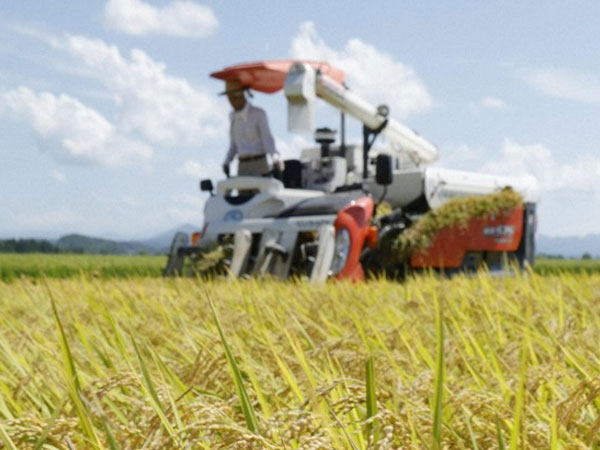
 TOKYO (Kyodo) -- The Japanese government on Friday decided to promote rice production aligned with demand and introduce new measures to prevent shortages, marking a shift from an earlier policy that boosted output to address elevated prices in recent years.
Prime Minister Sanae Takaichi's government approved a bill to revise the law on the stable supply and prices of staple foods at a Cabinet meeting and submitted it to the Diet the same day, aiming to prevent rice overproduction.
The move marks the latest shift in the government's rice policy, after Takaichi's predecessor, Shigeru Ishiba, pledged last August to boost production and expand exports to end de facto production controls aimed at supporting farmers by limiting rice output.
Takaichi, who took office in October, has been distancing herself from Ishiba's policy, apparently heeding voices within her ruling Liberal Democratic Party that farmers -- a key support base for the LDP -- may struggle if rice prices fall due to a possible supply glut.
Speaking at a press conference after the Cabinet decision, Minister of Agriculture, Forestry and Fisheries Norikazu Suzuki said the government will "abolish provisions for production adjustments based on the assumption of declining rice demand" and work to boost uptake of the staple.
Under the bill, the revised law would stipulate that "the government will promote production responding to demand" and that producers "proactively make efforts" toward that end.
An increase in production is not ruled out if demand grows, including from overseas.
The country's policy on the staple food came under intense scrutiny in the wake of a rice crisis that began around the summer of 2024, with shortages sending prices sharply higher. The government responded by releasing the bulk of its emergency reserves to stabilize the market.
A misjudgment in the demand outlook, including underestimating factors such as a surge in foreign tourists, was seen as partly behind the rice crisis. High temperatures affecting supply have also pushed up prices.
As part of measures to prevent future shortages, the proposed law revisions would call on food-related businesses to periodically report their rice stock levels and transaction prices.
To supplement government rice reserves, which can be released quickly in the event of a shortage, large private companies would be required to hold rice stocks.
Of the 1 million tons deemed an appropriate level of rice reserves in the country, private companies would be tasked with securing 200,000 tons.
In the event of a supply shortage, the government would issue warnings or publicly disclose the names of businesses that fail to comply with its release orders.





© Copyright 2025 The SSResource Media.
All rights reserved.