

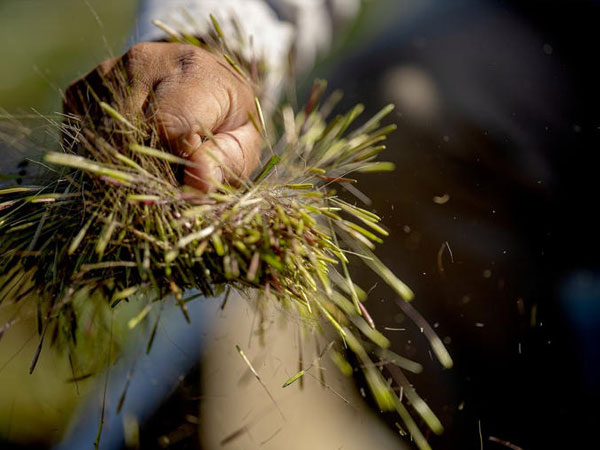
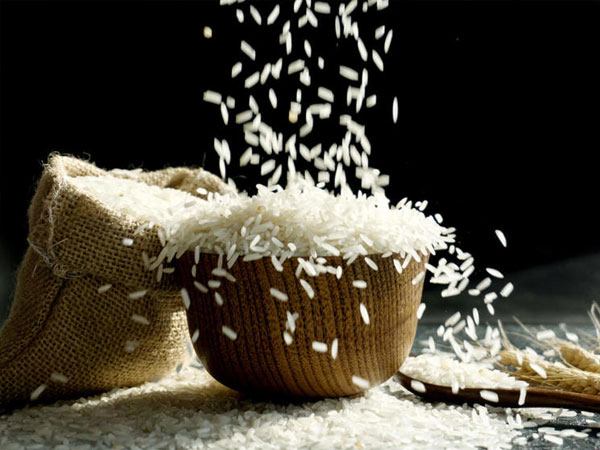
 Cups of cooked wild rice traditionally harvested from the Leech Lake reservation were handed out to Minnesota Senate committee members Tuesday by advocates of the state grain.
A proposed bill would amend the definition of the state grain in statute to include: “It is the policy of this state to recognize the inherent right of wild rice to exist and thrive in Minnesota.”
Opponents asked what “inherent right” means and how it would be enforced, arguing the language opens the state up to potential litigation. Indigenous rights and environmental advocates say there are great risks to wild rice, which is diminishing and under threat due to pollution and climate extremes. Wild rice is viewed by Native Americans as a living being and relative.
Other legislation is being introduced that would ban pesticides and motorized watercraft in wild rice beds, implement wake restrictions and require risk justification for projects that might damage wild rice waters.
Rep. Mary Kunesh, DFL-New Brighton, first introduced the Wild Rice Act last year on the heels of one of the state’s worst harvests in recent memory. The legislation died in committee and was reintroduced in parts this session with Kunesh, the first Indigenous woman to serve in the state Senate, spearheading the efforts again.
Similar debate resurfaced, with leaders of the Minnesota Department of Natural Resources and Minnesota Pollution Control Agency alleging the ambiguity of “inherent right” is a legal vulnerability to state agencies.
Sen. Steve Drazkowski, R-Mazeppa, said the proposal didn’t pass out of committee last year, when two Democrats voted with Republicans against the measure.
“Now you’re bringing it back again. It appears to me that, at least as a bill, this doesn’t have a chance of passage here. Why are we here today?” Drazkowski asked Kunesh.
“We brought it because we believe in it,” Kunesh replied. “We recognize that wild rice is a vulnerable entity, that we have not been good stewards of over the years, no matter what we do.”
Wild rice, called manoomin in Ojibwe and psíŋ in Dakota, has long been contentious at the State Capitol. It already has some legal protections such as those for proper harvesting, food labeling and water quality, but funding and research is divisive and previous attempts to protect it have been fraught. Last year, sides clashed over “inherent right,” with some lawmakers arguing they couldn’t give rights to wild rice and not the unborn.
Tribal and state leaders recognize wild rice is under threat, but can’t agree on what to do about it in the face of earlier summers, warmer winters, pollution and invasive species.
Jessica Intermill, an attorney who helped draft the Wild Rice Act and current legislation, said “inherent right” sounds ethereal but really it’s the same as the Declaration of Independence, a policy applied to the species, not an individual grain.
Minnesota grows more wild rice than anywhere in the U.S.
“If we say we’re the wild rice state, then it’s time to be the relative that it needs us to be,” she said.
The White Earth Band of Chippewa adopted the “Rights of Manoomin” in 2018 and listed wild rice as lead plaintiff in a lawsuit against the state over the Line 3 oil pipeline.
Bob Meier, an assistant commissioner with the DNR, said the lawsuit was dismissed over a lack of standing but said “our concern is opening the state up to more legal action.”
Last year, the Wild Rice Act was introduced in an environmental committee hearing. The approach this year was to split the act into four parts “to allow for deeper discussion and in the hope that something good moves forward,” said Leanna Goose, member of the Leech Lake Band of Ojibwe and the Rise and Repair Coalition, a group leading support of the legislation.
“If the Legislature and state agencies consider manoomin first, as should already be happening, then we can avoid that litigation altogether,” she said in testimony Tuesday before members of the Committee on State and Local Government.
In addressing a comment made earlier by Drazkowski asking if the state butterfly and state bee should also have inherent rights, Goose said those species are endangered like wild rice, which is a food protected under treaty rights.
“Our relationship with the natural world is broken. We’re operating on broken systems of extraction that take and take and give nothing back,” she said. “This is about our responsibility to do better for children and changing these systems that are broken.”
A vote that would amend the definition of the state grain in statute to include the “inherent right” language was delayed for consideration in the committee’s omnibus bill.


© Copyright 2025 The SSResource Media.
All rights reserved.