

 The uneven monsoon is threatening crop growth in India, leading to a 15% rainfall deficit. Kharif sowing as of September 18 is down 1.3% from last year, with declines in vital crops like rice and maize, while pulses and some oilseeds have shown minor growth.
New Delhi: The kharif sowing pace has nearly caught up with last year, although acreage under several key crops remains lower, according to agriculture ministry data. Farmers had sown 110.39 million hectares as of 18 September, down 1.3% from a year earlier, or 1.5 million hectares lower than last year. The acreage is also close to the ministry’s normal benchmark of 110.4 million hectares.
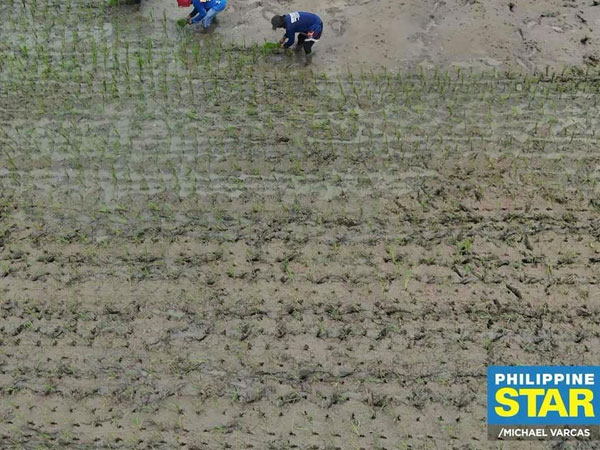
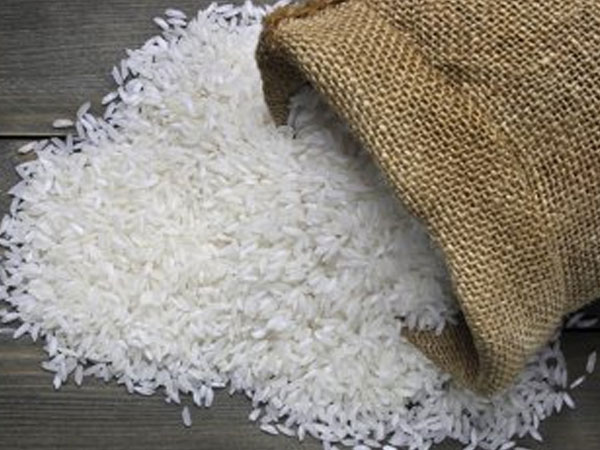
The headline figure obscures declines in key crops such as rice, maize, sugarcane and cotton, which are crucial to India’s food and fibre supplies. Rice acreage fell 3.7% year-on-year to 42.9 million hectares.
Pulses offered some support, with acreage rising 1.4% to 11.9 million hectares, led by gains in Uttar Pradesh, Jharkhand, Telangana, Rajasthan, Madhya Pradesh and Andhra Pradesh. Also, coarse cereals and oilseeds increased marginally, while cotton and sugarcane remained below last year’s levels.
The uneven monsoon remains a concern. A 15% rainfall deficit and dry spells are threatening crop growth. Experts said India’s agricultural resilience will increasingly depend on improving productivity and ensuring every hectare is managed efficiently.
"India’s agricultural resilience will ultimately depend not just on how many hectares we cultivate, but on how productively and sustainably we manage every hectare," Uday Raj Anand, chief executive officer (CEO) - Domestic Business, Parijat Industries, an agrochemical firm.
Area under Shri Anna and coarse cereals stood at 18.5 million hectares, marginally up from 18.4 million hectares a year earlier. The increase in area was mainly due to higher acreage in Rajasthan, Chhattisgarh, Odisha, Madhya Pradesh, Uttar Pradesh, Bihar, Jharkhand and Uttarakhand. The area under maize declined to 9.27 million hectares this year from 9.48 million hectares last year.
Retreat of the southwest monsoon
Oilseed acreage edged up to 19.4 million hectares, an increase of more than 1,000 hectares from a year earlier. Lower acreage under soybean and groundnut offset gains in crops such as sesame and sunflower.
Cotton acreage was also marginally lower at 10.9 million hectares, compared with 11 million hectares a year ago. The decline in cotton area coverage is mainly attributable to substantial reductions in Rajasthan and Haryana, followed by declines in Punjab and Andhra Pradesh, which have more than offset the gains recorded in Madhya Pradesh, Telangana and Gujarat.
Sugarcane acreage at 5.84 million hectares was marginally below the 5.88 million hectares recorded a year ago.
Meanwhile, the India Meteorological Department (IMD) has forecast that conditions are favourable for the withdrawal of the southwest monsoon from the remaining parts of Punjab, Haryana-Chandigarh and Delhi, some more parts of Rajasthan, as well as parts of Saurashtra & Kutch, Jammu & Kashmir, Himachal Pradesh, Uttarakhand and west Uttar Pradesh during the next 2-3 days. The withdrawal of the southwest monsoon typically begins in western Rajasthan in September, then gradually progresses towards other parts of northwest and central India, and subsequently towards the southern peninsula and eastern regions.
The retreat marks the transition towards the post-monsoon season, although the pace of withdrawal depends on prevailing rainfall and atmospheric conditions.









© Copyright 2025 The SSResource Media.
All rights reserved.