

 A predicted record-strength Super El Niño is intensifying across the Pacific and could stretch into early next year. It threatens severe droughts, floods and disrupted harvests, deepening food insecurity for millions worldwide. The impact is already being felt in Thailand, one of the world's biggest rice exporters. Dusita Saokaew reports from Nakhon Pathom.
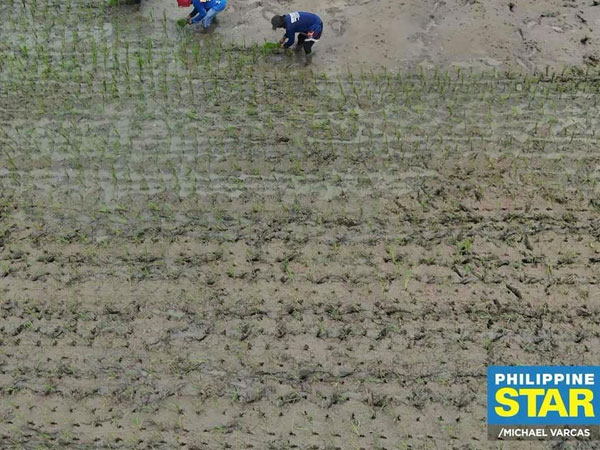
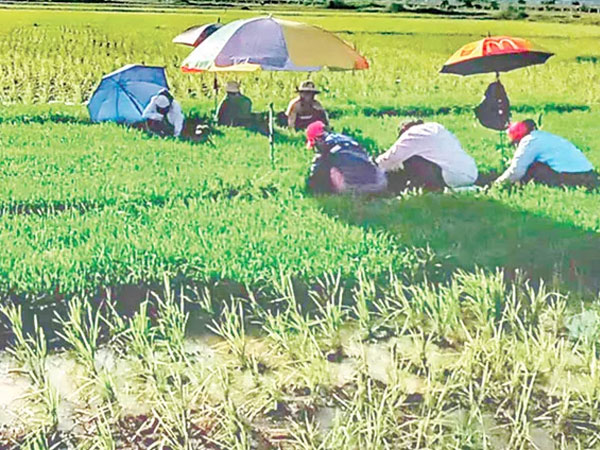
These fields remember the seasons. This farmer remembers better days…
PAIRACH SENGCHAREON Rice Farmer "Costs are high, yields are low, and prices for their produce are extremely low. Farmers can't bear it anymore."
For generations, the seasons set the pace of life here.
Today, every planting season has become a gamble. One missed rain can wipe out months of work.
DUSITA SAOKAEW Nakhon Pathom, Thailand "This is where Thailand's rice story begins. In fields like these, farmers have grown one of the country's most important crops for generations, supplying both local markets and millions of people around the world. But while the crop hasn't changed all that much, the conditions it's grown in have. And for many farmers, a way of life built over generations is now being pushed to its limits."
PAIRACH SENGCHAREON Rice Farmer "If rice cultivation lacks water, it's over. For farmers, it's a complete collapse."
After years of increasingly erratic weather, experts say Thailand's rice industry is entering unfamiliar territory.
Meteorologists are warning that a Super El Niño could bring even hotter temperatures and prolonged dry spells across Southeast Asia.
The last major El Niño left reservoirs depleted, fields parched and yields falling. But a Super El Niño could push agriculture to a dangerous tipping point. A doomsday scenario that could hit production, exports and rural incomes all at once.
The warning isn't simply about one harvest.
It's about Thailand's ability to continue producing one of the foods the world depends on as the climate becomes increasingly unpredictable.
KRISCHANON CHINDAVONG Analyst, Krungthai Bank "Super El Niño is expected to be unprecedented in severity. We estimate that the agricultural sector and production alone will suffer losses of approximately 62 billion baht (USD$1.84 billion dollars). We estimate that approximately 5.4 million tonnes of un-milled rice will be lost from the system."
That annual reduction of around 15% is changing how Thailand thinks about food security.
The challenge isn't simply growing rice anymore.
It's growing rice with less water.
Inside this research center, scientists are racing against a changing climate, developing drought-resistant rice varieties capable of surviving longer dry spells while maintaining yields. Using decades of breeding and genetic research, they're searching for rice that can survive a future where drought may become the norm rather than the exception.
SIWARET ARIKIT Director, Rice Science Center, Kasetsart University "If the Super El Niño is as severe as we predict, it will definitely have an impact on food security. Water-saver rice is a project we've been working on for almost 10 years now. It's taken a long time because we started by searching for the gene in collaboration with the University of Sheffield and with partners in China. Water-saver rice uses 20 or 30% less water than regular rice."
Scientists are rewriting the seed.
The next chapter will be written by farmers.
The question is if they can hold on long enough to weather what comes next.
Dusita Saokaew, CGTN, Nakhon Pathom, Thailand.



© Copyright 2025 The SSResource Media.
All rights reserved.