

 FCI–NERAMAC rice scandal highlights governance risks as Indian and Vietnamese export prices firm. Concise outlook, risks and trading ideas.
India’s alleged FCI–NERAMAC rice allocation scandal is adding a new layer of policy and governance risk to an already tight rice market, but has not yet disrupted physical supply. Export prices from India and Vietnam remain firm, with buyers watching New Delhi’s policy response closely. India’s investigation into irregular, underpriced rice allocations under the Open Market Sale Scheme (OMSS) comes at a time of tightening Asian supply, firm export prices and an uneven monsoon. While the case centers on governance failures rather than crop loss, it raises questions about the integrity of India’s public stock management and the risk of further administrative tightening. For global buyers, this means a higher premium on origin diversification and risk management, even as benchmark FOB quotes from India and Vietnam stabilize at elevated levels.
Prices
Indian FOB quotes in New Delhi are broadly stable at elevated levels. Recent offers show 1121 steam around EUR 0.71/kg, 1509 steam near EUR 0.67/kg, and golden sella about EUR 0.81/kg, with premium organic basmati near EUR 1.61/kg and organic non-basmati around EUR 1.32/kg (all FOB, converted to EUR). Vietnamese long white 5% is quoted near EUR 0.35/kg in Hanoi, with fragrant Jasmine around EUR 0.36–0.37/kg. Overall, price changes over the last three weeks have been marginal, but levels remain historically firm.
Supply & Demand, Policy and the FCI–NERAMAC Case
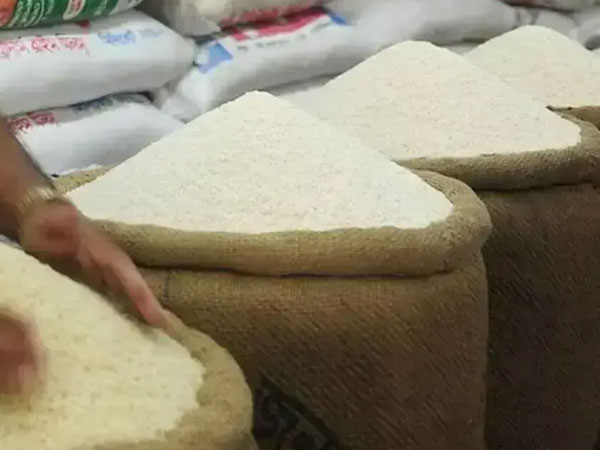
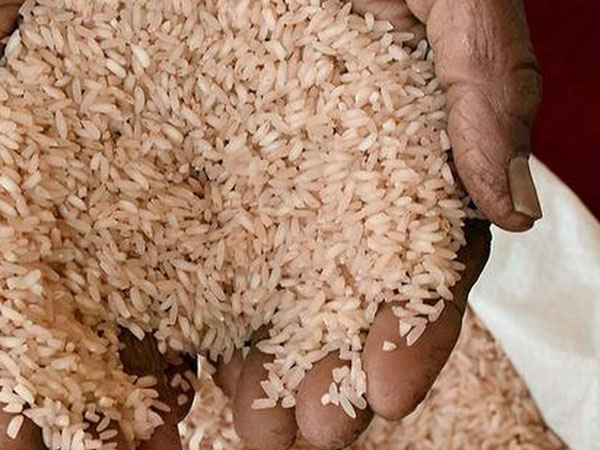
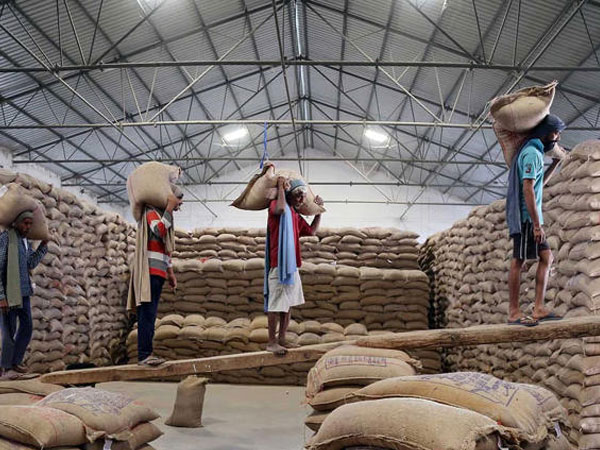
The ongoing criminal investigation in India focuses on a 62,000 MT rice allocation from FCI’s Delhi region to NERAMAC under OMSS (Domestic) at a concessional INR 23,200/MT, well below the prevailing reserve price of INR 28,900/MT. According to the FIR, this non-auction allocation violated policy, which restricts such concessions to state governments or state corporations, and allegedly caused a loss of roughly INR 2.887 billion to FCI. Instead of reaching daily wagers and migrant workers, the rice was reportedly diverted to traders via private “channel partners.”
Structurally, the case highlights three market-relevant issues. First, it exposes leakages and potential arbitrage inside India’s public stock operations, at a time when domestic and export markets are tight. Second, it increases the likelihood of stricter oversight over OMSS and government stock releases, possibly reducing discretionary, off-auction flows to the open market. Third, if legal proceedings broaden, officials may respond with more conservative stock management, indirectly tightening available volumes for domestic bulk users and exporters, even if headline production remains adequate.
Fundamentals and Weather
On the fundamentals side, Asian export supply remains concentrated in India, Vietnam and Thailand. Recent Vietnamese customs and ministry data show about 6.0 million tonnes of rice exported in the first eight months of 2026, worth roughly USD 2.9 billion, with average prices around USD 482/tonne. Export values are slightly below last year, but prices have begun to recover since July as supply tightens and demand from key buyers improves.
In India, monsoon rainfall in 2026 has been uneven, with an overall deficit despite periods of heavy rain in central and northeastern regions. Official rainfall monitoring indicates subdued activity over peninsular India into early September, keeping production risks in focus for some kharif rice areas. While current price levels suggest markets are not yet pricing in a major crop failure, the combination of weather uncertainty and tighter public stock governance post-scandal argues against any meaningful downside in the short term.
Market Impact of the Governance Scandal
Because the alleged irregular allocation was limited to 62,000 MT, the direct volume impact on India’s total rice balance sheet is small. The core risk for markets is not physical scarcity from this batch, but the policy reaction. If New Delhi responds with tighter rules on OMSS allocations, tougher scrutiny of parastatals and reduced flexibility in stock releases, domestic spot liquidity could thin, particularly in deficit states and for non-basmati grades that depend heavily on public stock rotation.
For international buyers, the episode reinforces two concerns: governance risk around Indian public stocks and the possibility of sudden changes in domestic availability that spill over into export policy and pricing. Coupled with firm demand from Africa and Asia and already-elevated FOB quotes for 5% broken and parboiled rice out of India and Vietnam, the scandal adds a premium for origin diversification and for locking in volumes under clear, auditable contracts rather than opportunistic spot deals








© Copyright 2025 The SSResource Media.
All rights reserved.