

 SINGAPORE — The expected onset of the El Niño climate phenomenon later this year and the spike in prices of fertilizer caused by the war in the Middle East are raising the possibility that farmers in the Philippines and the rest of Asia will produce less rice this year and the next. Some planters may even be forced to stop rice farming altogether because of the surge in production costs.
Yvonne Pinto, director general of the Philippines-based International Rice Research Institute, told the Inquirer in an interview here on the sidelines of the Philanthropy Asia Summit 2026 that in the region, a number of farmers have been applying less fertilizer because the input has become more expensive.
Prices have risen by some 33 percent since Iran fought back against the joint attack by the United States and Iran in late February by controlling the Strait of Hormuz, through which about a third of key fertilizer chemicals pass.
That continuing disruption in logistics caused by the Middle East War, now almost into its third month, has caused delivery costs — and consequently the selling price — of fertilizers to escalate, hitting Filipino farmers already hurt by high production costs.
Filipino farmers spend about P60,000 a hectare (ha) to grow rice, with labor accounting for 30 percent of total costs.
Fertilizer prices in the Philippines are also higher than in leading rice producers Vietnam and Thailand.
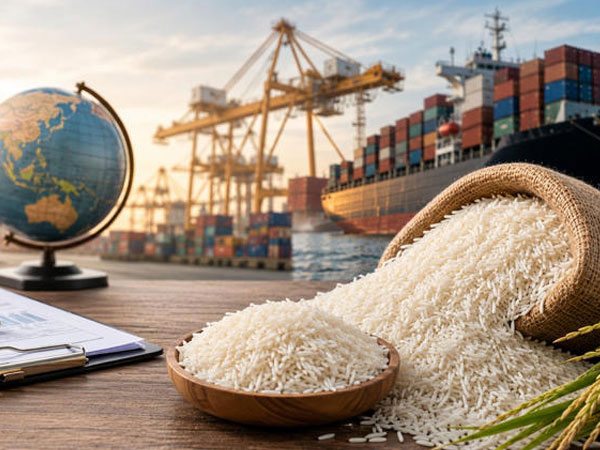
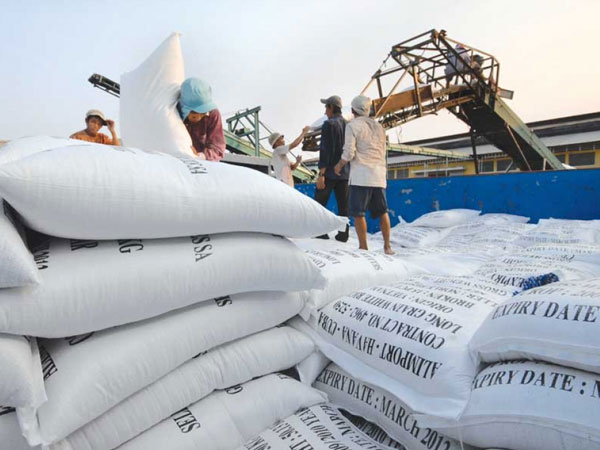
“If we can’t keep (Filipino rice farmers) in farming, we’re not even going to get a chance to actually produce the yields that are required, so then of course imports will start to rise. And as imports start to rise, then prices start to rise, and we will see volatility in the markets,” Pinto said.
The impact on output of reduced fertilizer application would likely be felt in the 2027-2028 harvest seasons, she added.
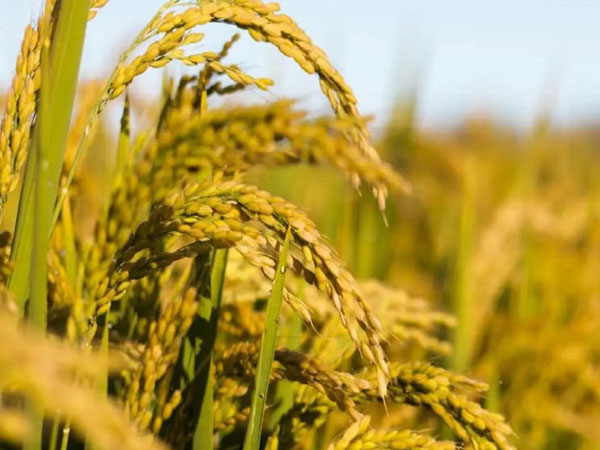
Compounding farmers’ woes is El Niño, characterized by dryer for longer conditions that are not conducive to water-intensive rice farming, particularly in the Philippines, where only about 40 percent of farmland is irrigated.
Based on the latest estimates by the rice sector, El Niño could cut the country’s total rice output this year by as much as four million metric tons (MT).
The Department of Agriculture (DA) likewise said that it no longer expects palay or paddy rice production to hit a fresh record high this year due to soaring fertilizer and fuel costs and the looming El Niño.
Before the Middle East war, the DA projected that palay output would hit 20.28 million MT this year. That would have been 1.1 percent more than the 2023 output of 20.06 million MT, the highest volume recorded since 1987 by the Philippine Statistics Authority.
The likelihood of a severe El Niño episode aggravated by the continuing conflict in the Middle East, however, prompted the DA to revise its output forecast this year to 19.87 million MT. This could be revised even lower with no end to the Middle East crisis in sight, and if weather conditions become worse than expected.
Productivity indeed has been a perennial challenge for farmers in the Philippines, where average output is pegged at 4.1 to 4.2 MT per hectare, short of the attainable yields of 6-8 tons under improved systems, said Pinto.
“The response therefore has to be integrated: better seed systems, climate-resilient varieties, efficient fertilizer management, mechanization, improved irrigation and water management, and stronger digital advisories for farmers,” Pinto said.
These digital advisories, for example, could help rice farmers and the rest of Asia plant the right seeds and in the right areas and apply the optimum amount of fertilizer to ensure maximum yield despite the challenging conditions.
“Even less than one additional ton per hectare nationally could materially improve the country’s rice supply and import position,” she said. /atm



© Copyright 2025 The SSResource Media.
All rights reserved.