

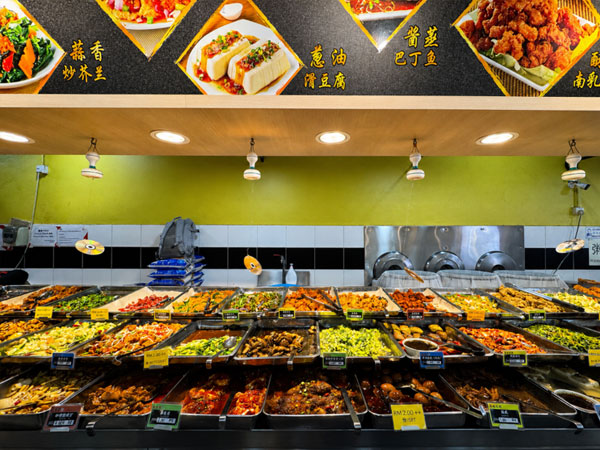
 Known to many as geng zai fan — Cantonese for economy rice — the mixed-rice staple built its reputation on affordability, allowing diners to choose according to their budget.
Today, however, both customers and operators say the term has taken on a different meaning.
Prices have risen, margins have narrowed and competition has intensified, transforming economy rice from one of Malaysia’s cheapest meals into a category increasingly defined by value, variety and quality.
“You can’t call it economy rice anymore in today’s economic climate, although yes, there are still some pockets of eateries that are trying to keep up with the concept,” said Ah Fatt, a staff member at Restoran 10 Mixed Rice 10 in Wangsa Maju.
“As I recall, when this mixed-rice business started, the name of the restaurant had already acknowledged the reality that it is quite impossible to keep prices as low as before.
“So we’re known as a specialty mixed-rice store instead of using the term economy rice.”
The restaurant’s branding reflects a wider shift in how mixed-rice outlets are perceived.
Once associated primarily with affordability, many customers today judge outlets based on the variety of dishes available, food quality, cleanliness and overall dining experience.
Restoran 10 Mixed Rice 10 serves up to keeps diners coming with 100 types of mixed-rice dishes — Picture by Soo Wern Jun (May 2026)
Keeping prices low
At Restoran 10 Mixed Rice 10, dishes are individually priced and clearly labelled, allowing customers to make informed choices before reaching the cashier.
Ah Fatt said maintaining affordability depends on volume rather than frequent price hikes.
“We serve up to 100 dishes daily and rotate the menu regularly.
“So long as we maintain a good turnover of customers, we’re able to sustain.”
He described the business as a constant balancing act between price, taste, variety and hygiene — across all of its 20 outlets.
“It’s competition of taste, price and variety of dishes — not forgetting hygiene of the restaurant.
“We change our dishes every day to keep up with customer demands, but we have been keeping our prices low, understanding that our customers are mostly middle- to low-income earners.”
The challenges extend beyond Chinese mixed-rice stalls
Across the country’s diverse dining landscape, Malay nasi campur operators and Minang restaurants are grappling with many of the same pressures: rising ingredient costs, increasingly discerning customers and limited room to raise prices.
At Patin Pasu, manager Jannah said the restaurant has not raised prices despite mounting cost pressures and supply disruptions linked to tensions in the Middle East.
She said expenditure that previously sustained operations for five days now lasts only three.
Yet cutting corners is not an option.
As one of the cooks behind the restaurant’s signature tempoyak patin and smoked meat dishes, Jannah said certain ingredients cannot be substituted without compromising flavour and texture.
“We kept our prices from before, but cooking ingredients keep going up.
“As one of the cooks at the restaurant, I understand that some ingredients simply cannot be replaced.
“If things don’t improve, we may have to adjust our prices, but we hope it doesn’t come to that.”
One nasi campur operator at a food court in Taman Maluri, Cheras said ingredient prices have become increasingly unpredictable, forcing her to alter the dishes she prepares.
Nasi campur still a popular choice, some refer to it as the Malay cuisine of economy rice — Picture by Hari Anggara
“Spinach has become pricey, so sometimes I change the dishes to include bean sprouts instead.
“Buying ingredients for a nasi campur spread is no longer straightforward. I have to source from five different hypermarkets or markets in search of the most cost-efficient ingredients,” said the operator, who declined to be named.
At a Minang restaurant in Gombak, owner Husni said she has reduced the quantity of ingredients she orders from suppliers as costs continue to rise.
“What’s most expensive here is beef and seafood, so I had no choice but to increase these dishes from RM7 to RM8,” she said.
Even then, the increase was carefully considered to avoid driving away regular customers.
The comments highlight a common dilemma faced by restaurant owners regardless of cuisine.
Still a popular choice
Despite higher prices, mixed-rice outlets continue attracting diners because they offer something difficult to replicate at home: a wide variety of dishes available in a single meal.
From chai boey (mustard greens stew), steamed egg and vinegar pork knuckle to fish or mutton curry, customers can enjoy food that would otherwise require significant time and effort to prepare.
“I have seen the transition from when it was called economy rice to what it is today — not-so-economy rice — and I still prefer this over an à la carte meal,” said engineer Desmond Lee C.H., 35.
“In a way, mixed-rice outlets make dining exciting because of the variety they offer, dishes that are too troublesome for home cooking like sweet and sour pork, lemon chicken, mixed vegetable curry or mushroom chicken stew.
Lee said prices have nearly doubled over the years.
“My colleagues and I no longer frequent our regular mixed-rice outlet. It just became too expensive.
“We used to pay about RM7 or RM8 for a meal. Now it’s RM12 to RM15, at the outlet that we no longer go to they charge more than RM15,” he said.
Chen Chien, 40, who works in Kuala Lumpur city centre, said prices vary depending on location and the type of dishes served.
“In general prices have increased.
“I pay a minimum of RM9.50 for one serving of meat and two servings of vegetables. Some days it could go up to RM14 if I take an additional omelette or meat dish.
“Back then I could get a meal for RM6.50.”
A variety of local Indian cuisine dishes at SS Spicy Food, Jalan Akar — Picture from SS Spicy Food Facebook
For marketing executive Nor Alia Samad, 37, an Indian mixed-rice stall along Jalan Akar in Kampung Attap remains a regular lunch destination despite higher prices.
“I come here often. It’s comfort food for me.
“Plus, they have kept their prices affordable for the last four years.
“If you take fish, it goes up to about RM15, but that’s actually standard in today’s meal pricing.”
Graphics designer Ilyana Mohd, 38, said she still pays less than RM10 for a mixed-rice meal in her Ampang neighbourhood consisting of rice, fried egg, begedil and ayam masak lemak.
“About 10 years ago we paid about RM6 for rice and a side of one meat dish.
“I think what I’m paying today is fair.”
No matter the price, she said the stall remains a source of comfort and familiarity, having been part of her teenage years.
If geng zai fan and nasi campur once referred to one of the cheapest meals a person could buy, today it has come to mean something else.
For diners, value is no longer measured solely by price, but by the balance of variety, convenience, familiarity and quality.
Economy rice may no longer be as economical as its name suggests, but judging by the lunchtime crowds, many Malaysians still believe it offers something increasingly difficult to find: value for money.









© Copyright 2025 The SSResource Media.
All rights reserved.