

Highlights
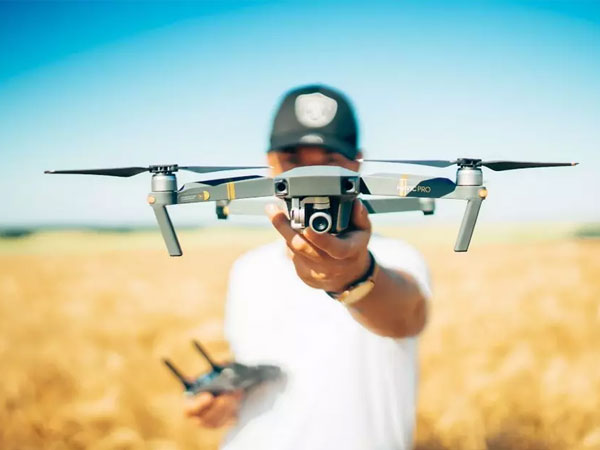
- Spray drones cost $20,000-$60,000 versus $1 million or more for agricultural airplanes, and farmers are buying them
- Drone-treated sugarcane fields produce 30 more pounds of sugar per ton after six weeks
- AI and satellite imagery let Louisiana farmers apply fertilizer where it’s actually needed instead of blanketing entire fields
- First-generation farmer Paul Van Mol calls drone technology “another tool we can use for timing”
- LSU programs are training the next generation of Louisiana farmers to fly drones and use precision agriculture
 LAFAYETTE, La. (KPEL News) — Drones fly over Keith Dugas’ sugarcane fields near Napoleonville every few weeks now. The images they capture tell him exactly which rows need more nitrogen and which don’t — almost plant by plant.
Josh Hebert farms sugarcane in central Louisiana. He bought a drone because he got tired of waiting on crop dusters. “I want to sweeten my cane when I want to sweeten my cane,” Hebert says.
Agriculture pumps $13 billion into Louisiana’s economy every year, but farmers are getting squeezed. Costs keep rising. Weather’s getting harder to predict. Finding workers is tough.
The fix isn’t high-tech magic — it’s practical tools that let Louisiana farmers do what they’ve always done, just more efficiently.
What Farmers Are Actually Buying
Spray drones have become one of the most visible changes in Louisiana agriculture. According to LSU AgCenter research, a complete setup with batteries and charger runs $20,000 to $60,000 — way cheaper than the $1 million or more you’d pay for an agricultural airplane.
Central Louisiana farmer Josh Hebert bought a drone so he wouldn’t have to wait for crop dusters during the busy pre-harvest season. “I want to sweeten my cane when I want to sweeten my cane,” Hebert told LSU AgCenter researchers. Timing matters for applying ripeners that boost sugar before harvest.
The investment pays off. LSU AgCenter testing shows drone-treated sugarcane plots averaged 30 more pounds of sugar per ton after six weeks — same results as airplane applications but more precise and cheaper.
Paul Van Mol is a first-generation farmer. “I’m a first-generation farmer, and I grew up in this area with my dad,” Van Mol said. “Farming with a drone is another tool we can use for timing.”
AI That Actually Works in Louisiana Fields
Artificial intelligence means something real in Louisiana agriculture. The LSU AgCenter uses data analytics, satellite imagery, and AI to help farmers make decisions in real time.
Keith Dugas farms 2,800 acres of sugarcane near Napoleonville. Drones fly over his fields every few weeks, capturing images that drive farm decisions. Dugas told LSU researchers he signed up to test GreenSeeker crop sensor technology nearly 15 years ago to pinpoint fertilizer applications.
Now he works with LSU graduate student Dulis Duron to use drone and satellite imagery for predicting sugar yields. “Before it was kind of a shot in the dark and mainly using historical averages to predict yields,” Dugas explained. “I never thought drones could be as useful as they are now — flying chemical and ripeners over the field. These images get better and better, and the predictions become more reliable.”
The technology creates detailed maps showing exactly how much nitrogen each row needs. When Dugas harvests in the fall, GPS-equipped combines with yield monitors check whether predictions were right. That data feeds back into AI models that improve each season.
Rice Farmers Face Different Problems
Rice farming accounts for more than 450,000 acres in Louisiana and brings in $460 million. Climate change threatens this through rising nighttime temperatures, shrinking freshwater supplies, and saltwater intrusion from hurricanes.
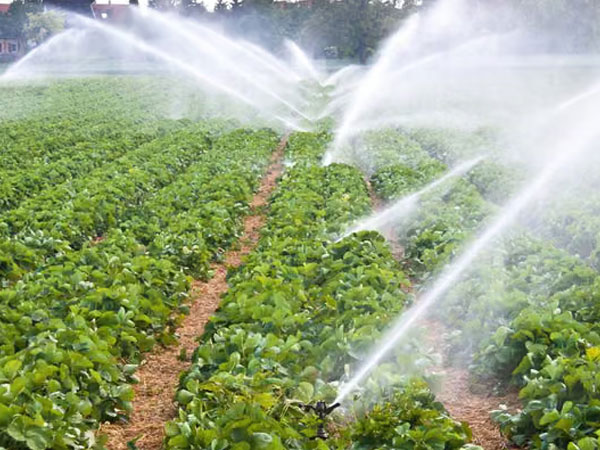
The LSU AgCenter’s CRISP-RICE project uses remote sensing, drone technology, and crop modeling to forecast disease and pest outbreaks. It also helps farmers time irrigation and fertilizer better.
North Louisiana rice farmers picked up precision drills faster than farmers down south. Practices like alternate wetting and drying irrigation cut water use without hurting yields.
“Using these AI and machine learning techniques, we can speed up the research process compared to traditional experimentation that can take decades,” Luciano Shiratsuchi, LSU associate professor in the School of Plant, Environmental & Soil Sciences, said in a 2022 statement.
Why Some Farmers Haven’t Switched Yet
Not every Louisiana farmer has jumped on board. LSU AgCenter specialist Thanos Gentimis estimates around 45% of Louisiana farmers have smart equipment on their machines — but many don’t use it yet.
Cost stops people. Small to medium-sized farms might spend $10,000 to $50,000 on AI tools. Larger operations could top $100,000.
Rural broadband is another problem. Many precision agriculture tools need reliable internet for data transmission and real-time analysis. Programs are working to improve connectivity, including the Louisiana Climate and Digital Ag Network (LaCADIAN), which will create a statewide network of automated field observatories and sensors.
Data ownership worries some farmers too. They want to know who’s using their farm data and who controls it.
Training Louisiana Students to Fly Drones
LSU of Alexandria is training students to become licensed remote pilots for agricultural drones. “We are starting the new agricultural program,” Nathan Sammons, Dean of LSU of Alexandria’s College of STEM, said. “We want to train students to work locally and be able to use drones and other technology to make farming more efficient, more cost-effective.”
LSU Alexandria, the LSU AgCenter, and Guardian Aerial — a Louisiana business founded by former military helicopter pilot Clinton Giglio — partnered up to bring precision agriculture education to Louisiana communities.
“This is a unique niche in our industry where we can incorporate new and emerging technology that the younger generations coming up are more fond of and familiar with into the agriculture industry,” Giglio said.
Ivan Grijalva, an AgCenter assistant professor, uses machine learning to train computers to spot redbanded stink bugs, weeds, and diseases.
What’s Next
Congliang Zhou joined the LSU AgCenter as an assistant professor and built a robot that moves through sugarcane fields to count cane stalks and help with breeding. “When the robotic system is moving through the field, the sensor will collect data from different angles of each plot,” Zhou explained. “Humans can only see from one angle. That’s the advantage.”
The AI processes field data in real time and counts more accurately than humans. “The future of precision agriculture is very exciting to see,” Zhou said. Right now, most precision agriculture technologies need a lot of human labor — someone has to fly the drones and analyze the data. That work will get automated too, eventually.
Randy Price has worked on agricultural drones at the LSU AgCenter for more than a decade. He’s watched the technology improve fast. “It looks viable now, and there is a lot of interest,” Price said. “They are remotely piloted, so it’s really safe for the pilot. We don’t worry about someone getting hurt or killed. And they are low cost — $20,000 to $30,000 or cheaper.”
Why This Matters Beyond the Farm
Technology in agriculture affects more than farmers. It creates jobs in ag-tech, data science, and rural broadband infrastructure — helping Louisiana’s economy grow beyond traditional industries.
“We’re really excited about the opportunities that partnering with LSUA, as well as the LSU AgCenter and the entire LSU program, to deliver great drone service using Louisiana-sourced labor, and to enable students to transfer into a career path in a high-technology industry,” Jason Ingalls, a Guardian Aerial board member, said. “That has a meaningful impact on a major industry in Louisiana agriculture.”
For Louisiana’s farming families, precision agriculture helps them keep doing what their families have done for generations while dealing with modern problems. As Acadiana farmers face economic pressure and weather that’s harder to predict, these tools give them a way forward — keeping farms sustainable and productive without giving up what makes Louisiana agriculture Louisiana agriculture.







© Copyright 2025 The SSResource Media.
All rights reserved.